

What Does Pathways Policy Institute Do?
Policies are often written in government offices.
Budgets are prepared in boardrooms and county offices.
But the consequences of those policies are experienced by people in their homes, schools, communities and health facilities.
Pathways Policy Institute (PPI) exists to help connect those two realities.
PPI is a community-based policy and accountability non-profit organisation working at the intersection of population, health, environment and climate justice.
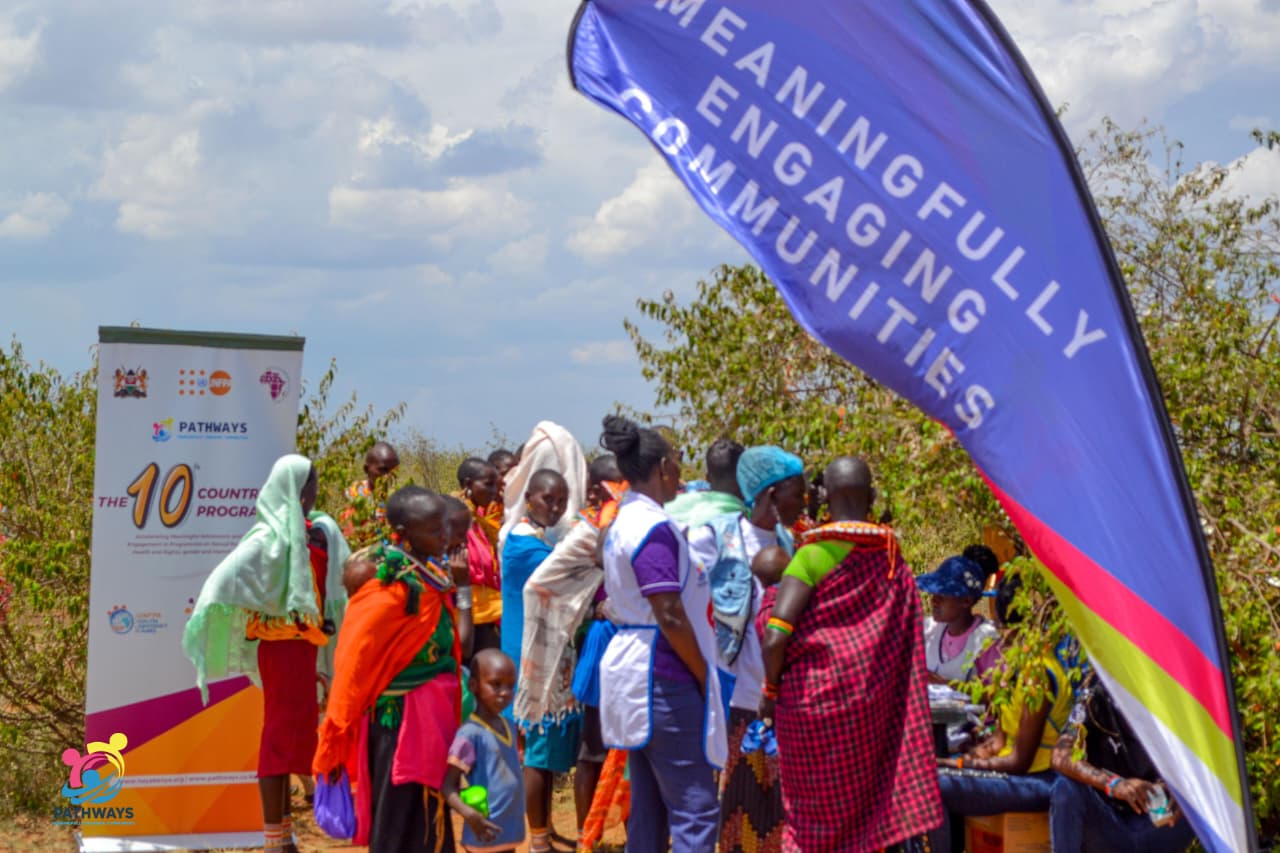
Its approach is centred on meaningful community engagement, research, training, advocacy and capacity strengthening, with the goal of helping communities participate in the policies and decisions that affect their lives.
Rather than viewing communities simply as beneficiaries of development programmes, PPI works to strengthen their ability to become informed participants and advocates in governance and policy processes.
PPI’s approach: putting communities at the centre of policy
At the heart of PPI’s work is a simple principle:
Communities should have a meaningful voice in the policies, budgets and systems that affect them.
This requires more than creating awareness.
People need access to information.
They need the ability to understand policies and budgets.
They need advocacy skills.
They need platforms where their experiences can be heard.
And they need opportunities to engage decision-makers.
PPI therefore creates spaces where advocates and communities can engage with public health and environmental policy through research, training and capacity strengthening. The organisation describes itself as independent, non-partisan and non-religious.
1. Health Policy and Universal Health Coverage
Health is one of the major areas of PPI’s work.
The organisation works to strengthen community health systems and promote policies that support accessible, quality and affordable healthcare.
PPI’s work takes a Primary Health Care lens, recognising that strong health systems need to work effectively at community and primary-care levels.
This includes engaging communities and civil society organisations on issues such as:
- Universal Health Coverage
- Primary healthcare
- Sexual and reproductive health
- Family planning
- Maternal and child health
- Adolescent and youth health
- Health financing
- Health budgets
- Social accountability
PPI has also conducted research into out-of-pocket expenditure, examining what women spend when accessing reproductive health and family planning services. Its research has been used to support evidence-based advocacy and policy dialogue.
The objective is not simply to produce research.
It is to use evidence to help communities and advocates engage decision-makers.
2. Sexual and Reproductive Health and Rights
Sexual and reproductive health and rights are another important area of PPI’s work.
PPI works with communities, young people, civil society organisations and government stakeholders around issues affecting access to reproductive health information and services.
Its publications include county-level research examining sexual and reproductive health and rights, family planning, maternal and child health, sexual and gender-based violence and efforts to address female genital mutilation. Recent research has examined these issues in counties including Samburu, Isiolo and Narok.
This approach connects policy, financing and lived experience.
For example, understanding whether a county has prioritised family planning in its budget can help advocates ask important questions about whether available resources match community needs.
PPI has also participated in broader advocacy networks focused on family planning and maternal health commodity security through the Advocacy and Accountability Collaborative.
3. Youth Advocacy and Leadership
Young people are an important part of PPI’s work.
Through initiatives such as the JASIRI Youth Champions Initiative, PPI has trained young advocates to participate in policy and accountability processes.
The programme has worked across multiple Kenyan counties.
PPI reports that its fifth JASIRI cohort trained 28 young advocates selected from 916 applicants across counties including Laikipia, Isiolo, Nakuru, Samburu, Nyeri, Narok, Marsabit, Nairobi, Kirinyaga, Nyandarua and Kajiado.
The training covered areas including:
- SMART advocacy
- Budget advocacy
- Sexual and reproductive health and rights
- Family planning advocacy
- Climate justice advocacy
A subsequent sixth cohort focused on strengthening the advocacy and accountability skills of SRHR and anti-FGM champions in Samburu, Narok and Isiolo.
The idea behind this work is important.
Young people should not only be consulted about policies that affect them.
They can also develop the knowledge and skills to participate in shaping those policies.
4. Building the Capacity of Civil Society Organisations
Policy change requires organisations and individuals who understand how government systems work.
PPI therefore invests in capacity strengthening.
Its SMART Advocacy work helps civil society organisations and youth understand how to identify advocacy priorities, map decision-makers and influencers, develop strategies and engage relevant institutions.
This is particularly important within Kenya’s devolved system of government.
Counties make important decisions around planning, budgeting and service delivery.
Civil society organisations therefore need the ability to analyse county plans and budgets, engage county officials and monitor implementation.
PPI’s consultancy and capacity-strengthening work has included training youth-serving CSOs, organisations of persons with disabilities and NGOs in SMART advocacy and the budget cycle.
5. Health Budget Advocacy
One of PPI’s distinctive areas of work is health budget advocacy.
A health policy can identify what should happen.
A budget determines whether there are resources to make it happen.
PPI conducts policy and budget reviews and analysis to generate evidence that can be used in community-led policy dialogue and county policymaking.
Its work has included analysing county allocations for family planning, reproductive health and maternal and child health.
For example, PPI has worked on family planning budget analysis in Laikipia County and used the findings to engage county assembly members and county health management teams.
This type of advocacy asks practical questions:
What has been budgeted?
What are the priorities?
Are resources sufficient?
Are funds reaching the intended programmes?
What does implementation look like on the ground?
These questions can help communities move from general concerns to evidence-based advocacy.
6. Public Participation and Social Accountability
PPI also works to strengthen the relationship between citizens and government.
Through its social accountability programmes, the organisation supports citizens to participate in governance, budgeting and monitoring of public services.
Its Timiza Ugatuzi project, for example, focused on social accountability in Laikipia County, including community engagement around health and water service delivery.
PPI has also been involved in participatory budgeting initiatives aimed at improving citizens’ ability to participate in budget processes.
The broader objective is to strengthen a culture where citizens do not simply wait for government decisions.
They understand the processes.
They participate.
They ask questions.
And they follow up.
7. Civic Education
For public participation to work, citizens need information.
This is where civic education becomes important.
PPI’s civic education work focuses on helping citizens understand governance and engage with national and sub-national governments.
The organisation describes civic education as a way of empowering citizens with the knowledge needed to ensure their needs and recommendations can find space within government policies and programmes.
This work supports a broader vision of informed citizenship.
A citizen who understands how county planning works is better positioned to participate in county planning.
A community that understands a budget can ask more informed questions about health spending.
A youth advocate who understands policy processes can engage decision-makers more effectively.
Knowledge becomes a tool for participation.
8. Climate Justice and the Environment
PPI’s work extends beyond health.
The organisation identifies environment and climate justice as core areas of its work.
This reflects the growing connection between environmental conditions, climate change, population dynamics and health.
Climate change can affect livelihoods, food security, water access and health systems.
Environmental challenges can also affect communities differently depending on their location, resources and ability to adapt.
PPI’s youth advocacy programmes have therefore incorporated climate justice alongside health and governance issues.
Its JASIRI programme, for example, has included climate justice advocacy among the areas covered in youth training.
The approach recognises that health, environment and development cannot always be addressed separately.
9. Adolescent and Youth Health Programmes
PPI also works directly with young adolescents.
Through programmes such as #BetterBoyz and #Tupepee2HighSchool, PPI has engaged young people around sexual and reproductive health, menstrual health and broader adolescent wellbeing.
Its #BetterBoyz programme has focused on educating young men about menstrual hygiene, fertility cycles and sexual and reproductive health, while contributing to conversations around positive masculinity and gender equality.
PPI’s publications also document its continuing work with young people around menstrual hygiene management, adolescent health and youth advocacy.
The underlying principle is that young people need accurate information and supportive environments to make informed decisions about their health and futures.
10. Research That Supports Action
Research is another major part of PPI’s work.
But PPI’s research is closely connected to advocacy.
Its publications include:
- Research reports
- Policy briefs
- Budget analyses
- Opinion pieces
- Memoranda
- Citizen budgets
- Annual reports
- Community-focused studies
Recent publications include county-level analysis of SRHR, family planning, maternal and child health and FGM, as well as citizen budget materials and research on out-of-pocket expenditure.
This creates an important pathway:
Research → Evidence → Advocacy → Policy dialogue → Accountability
The goal is to make research useful beyond the page.
11. Turning Complex Policy Information Into Community Action
Government policy documents can be difficult to understand.
Budgets can be technical.
County plans can contain hundreds of pages.
PPI’s role includes helping communities and advocates navigate this information.
Its work on citizen budgets is one example.
PPI collaborated with Groots Kenya and the Laikipia County Government on a citizen-friendly version of the approved county budget for the 2024/25 financial year.
This kind of work can make public financial information more accessible to ordinary citizens.
It is an important part of building an informed public.
12. Creating Platforms for Policy Dialogue
PPI does not work in isolation.
Its programmes bring together communities, youth, civil society organisations, government officials, researchers and other stakeholders.
For example, PPI has convened stakeholders to discuss findings from county health and SRHR budget analyses, bringing together county officials, Members of County Assembly, technical departments and youth advocates.
These platforms create opportunities for evidence to be discussed directly with people involved in policy and implementation.
Dialogue becomes more meaningful when it is supported by research and community experience.
PPI’s Work in One Simple Framework
The breadth of PPI’s work can be understood through five connected areas.
1. Research
PPI generates evidence on health, population, environment, climate justice, budgets and community priorities.
2. Capacity Strengthening
PPI equips young people, civil society organisations and community advocates with knowledge and advocacy skills.
3. Community Engagement
PPI creates spaces where communities can identify priorities and participate in policy processes.
4. Advocacy
PPI uses evidence to support engagement with decision-makers at county and national levels.
5. Accountability
PPI supports citizens and organisations to monitor policies, budgets and public services.
Together, these areas create a cycle of informed participation.
Why PPI’s Work Matters
Some of the biggest challenges facing communities cannot be solved by awareness alone.
A community may know that maternal health matters.
But it also needs accessible services.
A young person may know their health rights.
But they also need systems that respond to those rights.
Citizens may want better healthcare.
But they need meaningful opportunities to influence budgets and policies.
Climate-affected communities may understand the challenges they face.
But their experiences need to reach decision-makers.
This is where policy and accountability work becomes important.
PPI works in the space between communities, evidence and decision-making.
From Communities to Policy Change
The work of Pathways Policy Institute can ultimately be understood through one central idea:
People should have a meaningful voice in the decisions that affect their lives.
That voice becomes stronger when communities have information.
It becomes more influential when people have advocacy skills.
It becomes more credible when supported by evidence.
And it becomes more sustainable when communities can participate in accountability processes.
Through research, training, youth empowerment, health advocacy, budget analysis, civic education, climate justice and community engagement, PPI works to strengthen these connections.
Its 2024 annual report describes this approach through work spanning health budget advocacy, climate justice, youth empowerment and policy dialogue, with a focus on the leadership and lived realities of local communities.
Ultimately, PPI’s work is not simply about policies.
It is about people.
It is about helping communities understand the systems that affect them, equipping advocates with the tools to participate, generating evidence that can inform decisions and creating spaces where community voices can influence policy.
That is the work of Pathways Policy Institute.
About Pathways Policy Institute
Pathways Policy Institute (PPI) is a community-based policy and accountability non-profit organisation in Kenya meaningfully engaging communities on population, health, environment and climate justice. PPI works through research, training, capacity strengthening, advocacy and community engagement to support meaningful participation in public policy and accountability processes.
Core values: Leadership, Ethics, Integrity, Trust, Responsibility and Innovation.